Archives
- 2026-08
- 2026-07
- 2026-06
- 2026-05
- 2026-04
- 2026-03
- 2026-02
- 2026-01
- 2025-12
- 2025-11
- 2025-10
- 2025-09
- 2025-03
- 2025-02
- 2025-01
- 2024-12
- 2024-11
- 2024-10
- 2024-09
- 2024-08
- 2024-07
- 2024-06
- 2024-05
- 2024-04
- 2024-03
- 2024-02
- 2024-01
- 2023-12
- 2023-11
- 2023-10
- 2023-09
- 2023-08
- 2023-07
- 2023-06
- 2023-05
- 2023-04
- 2023-03
- 2023-02
- 2023-01
- 2022-12
- 2022-11
- 2022-10
- 2022-09
- 2022-08
- 2022-07
- 2022-06
- 2022-05
- 2022-04
- 2022-03
- 2022-02
- 2022-01
- 2021-12
- 2021-11
- 2021-10
- 2021-09
- 2021-08
- 2021-07
- 2021-06
- 2021-05
- 2021-04
- 2021-03
- 2021-02
- 2021-01
- 2020-12
- 2020-11
- 2020-10
- 2020-09
- 2020-08
- 2020-07
- 2020-06
- 2020-05
- 2020-04
- 2020-03
- 2020-02
- 2020-01
- 2019-12
- 2019-11
- 2019-10
- 2019-09
- 2019-08
- 2019-07
- 2019-06
- 2019-05
- 2019-04
- 2018-07
-
Glucose permeability studies demonstrated a high
2024-06-19
Glucose permeability studies demonstrated a high glucose flux through the SF films used in the present work. Recent diffusion studies, including small molecular drugs and oxygen permeation through SF membranes [32], further support the quality of SF and its possible application as a material for bio
-
Although the mechanisms of APP secretion are
2024-06-19
Although the mechanisms of APP secretion are well characterised (for review see Ref. [1]), production of soluble AChE species is less well understood although we have reported that a metalloproteinase can shed AChE similarly to APP [16], [17]. Recently it has also been demonstrated that cellular pre
-
br AChE variants and their
2024-06-19
AChE variants and their functions The AChE gene generates several splice variants of AChE which are designated as hydrophobic (H), readthrough (R) and tailed (T) forms differing in membrane association and also localisation on a tissue and sub-cellular level. They all undergo significant posttran
-
Finally Urban Ciecko et al asked
2024-06-19
Finally, Urban-Ciecko et al. (2018) asked whether this enhancement is specific to the pyramidal to SST neuron synapses or more generally observed in other synapses of the cortical microcircuit. Synapses between pyramidal cells showed no sign of potentiation after either bath application of the chol
-
br Model Fig demonstrates the block scheme
2024-06-18
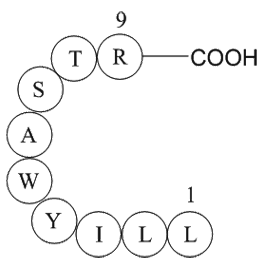
Model Fig. 1 demonstrates the block-scheme of main interactions between variables of the model under investigation. These interactions are described below in details and are expressed in mathematical form as well, where all variables are the functions of space and time coordinates, r and t, which
-
Chidamide br Introduction AMP activated protein
2024-06-18
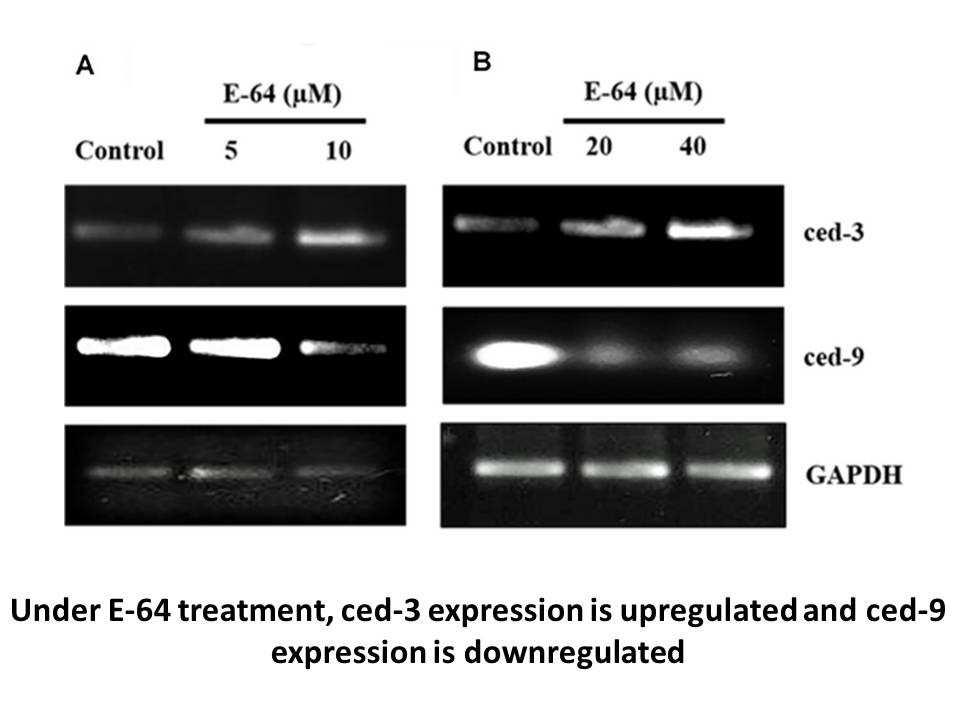
Introduction AMP-activated protein kinase (AMPK) has been found to be a key character against cardiovascular diseases and cellular stress. When activated by certain stress, AMPK regulates sugars and fatty acids that are good or detrimental to the heart. For example, targeting AMPK phosphorylation
-
Kuda et al reported that the activity of
2024-06-18

Kuda et al. (1997) reported that the activity of aminopeptidase A (ApA) but not aminopeptidase B (ApB) nor aminopeptidase N (ApN) was decreased in plasma from patients with Alzheimer's disease (AD). More recently Puertas et al. (2013) reported that the activities of plasma ApA, ApB, ApN and IRAP wer
-
Since HETEs and lipoxins the downstream products of
2024-06-18
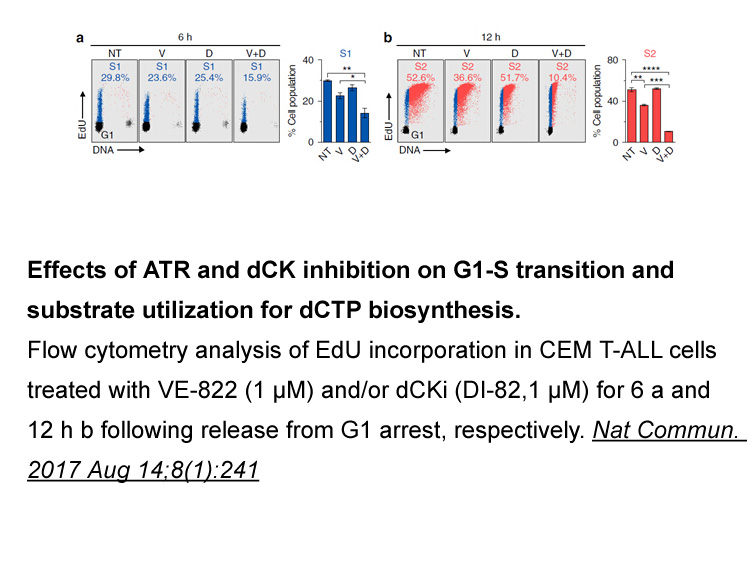
Since HETEs and lipoxins, the downstream products of 12/15-LOX from AA, may alter cellular proliferation and apoptosis,31, 32 and possibly explain the increase of tumour progression and metastasis. However, we here found that HETEs did not affect the proliferation of melanoma in vitro. This may part
-
It is noteworthy to mention
2024-06-18
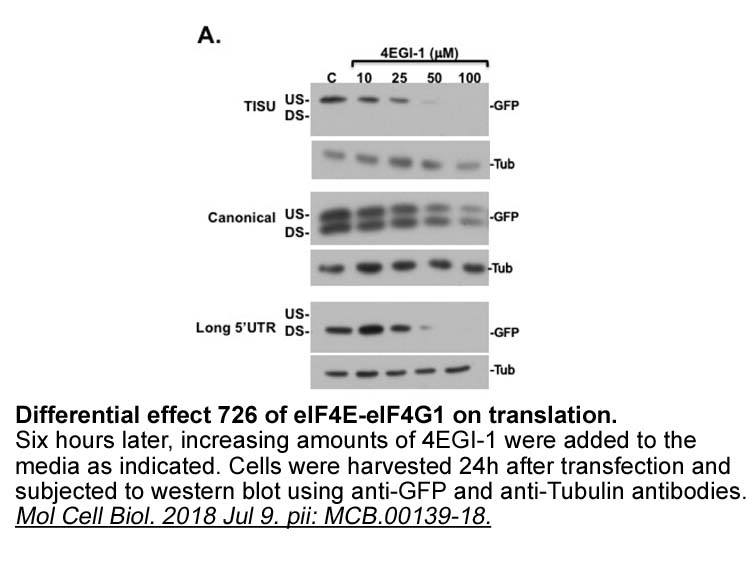
It is noteworthy to mention the limitations of this study like tPA plus LB1 treatment beyond 4 h after stroke was not investigated. Especially 6 or 8 h after stroke could be studied in future projects for translational purposes. Second drawback might be that we performed the experiments in different
-
The cavity volume of the binding pocket may
2024-06-18
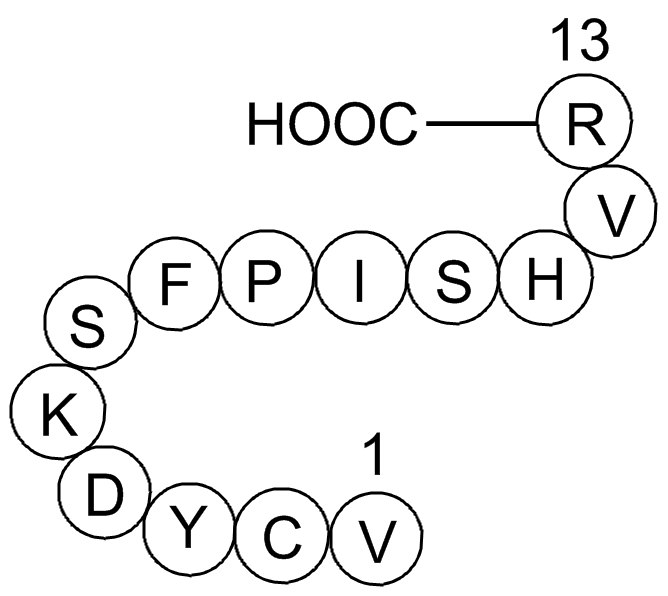
The cavity volume of the binding pocket may differ not only between species but also among various AhR/ARNT isoforms within a single species. It is noteworthy that even a single amino 1145 substitution within a binding pocket may result in a change in the cavity volume. This, in turn, may affect the
-
Pyocyanin We have previously shown that the
2024-06-17
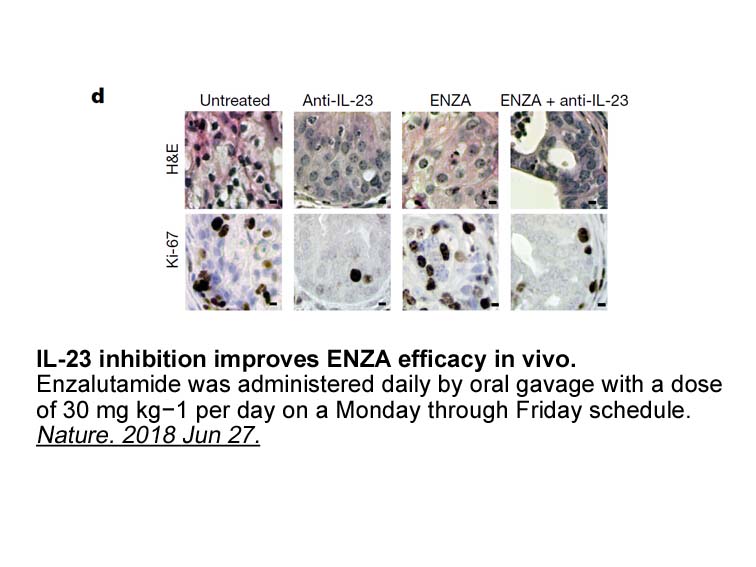
We have previously shown that the antinociceptive effect of tramadol, an analgesic that, like paracetamol is able to increase serotonin levels within CNS, is potentiated or antagonized respectively by a 5-HT1A/B nonspecific Pyocyanin blockade or activation (Rojas-Corrales et al., 2000). Moreover, i
-
MRT67307 HCl australia br Methods br Results br
2024-06-17

Methods Results Discussion Acknowledgements This work was supported by the National Institutes of Health [Grant R21 NS081429], a Pilot Grant from the Vanderbilt Conte Center supported by the National Institutes of Health [Grant P50 M096972], and by the Department of Anesthesiology at V
-
In this study we make the
2024-06-17
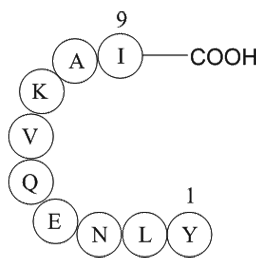
In this study, we make the first simultaneous recordings of Sulforaphane release in multiple brain regions at a temporal resolution less than 1 s. One of the most striking findings is that acetylcholine release has a remarkably similar temporal profile in the mPFC and dHPC, suggesting a coordinated
-
br Colabeling evidence for ACh and
2024-06-17
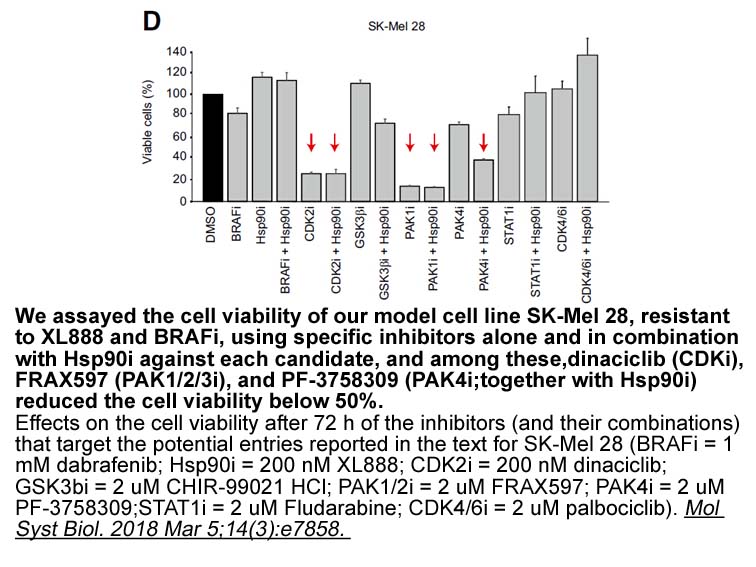
Colabeling evidence for ACh and GABA cotransmission Though functional demonstrations of ACh/GABA cotransmission remain largely limited to the retina and our recent analyses of cortex (Lee et al., 2010, Saunders et al., 2015a, Saunders et al., 2015b), evidence suggestive of ACh/GABA cotransmission
-
Since the localization of LO depends on phosphorylation we a
2024-06-17
Since the localization of 5-LO depends on phosphorylation, we also analyzed the phosphorylation profile of 5-LO-WT and all isoforms by Western blot using specific 4-Methylhistamine dihydrochloride receptor against the phosphorylation sites S271 and S523. Whereas phosphorylation at S271 activates th
16367 records 157/1092 page Previous Next First page 上5页 156157158159160 下5页 Last page